

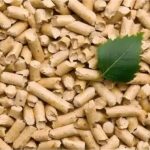




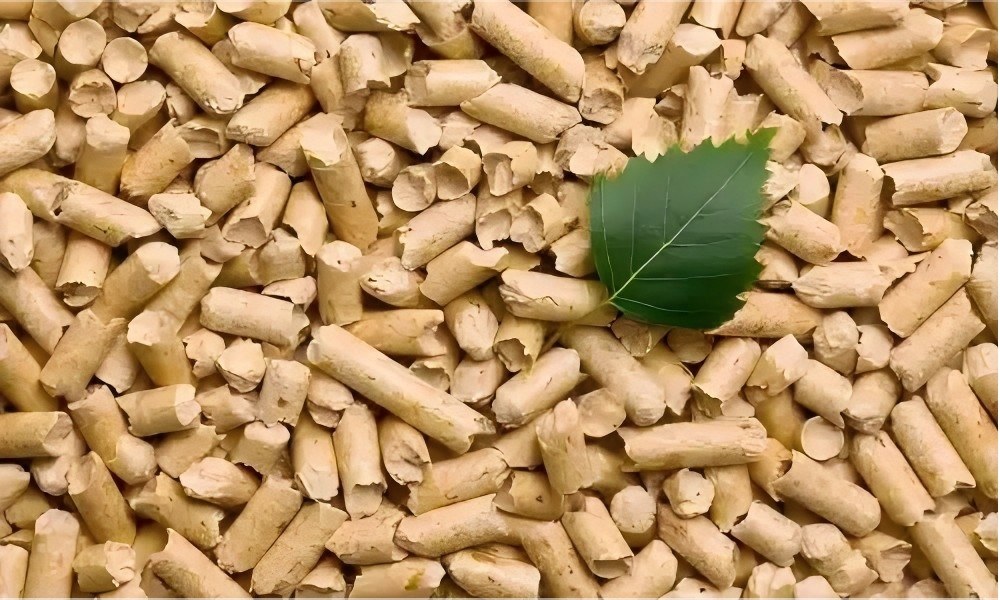
Straw pelletizing is a process that converts agricultural residues such as wheat straw, rice straw, corn stalks, barley straw, and other crop residues into compact biomass pellets. By reducing particle size, controlling moisture, and applying mechanical compression, loose and bulky straw can be transformed into a denser and easier-to-handle fuel.
The straw pelletizing process is more than simply putting straw into a pellet machine. Depending on the raw material condition, a complete production line may include raw material collection, cleaning, bale breaking, shredding, drying, crushing, moisture adjustment, pelletizing, cooling, screening, and packaging.
A properly designed straw pelletizer is the central machine in this process. It compresses prepared straw through a die to form pellets with a relatively uniform diameter and density. However, the quality and efficiency of pellet production depend on the entire processing system, including moisture control, particle size, feeding, die selection, and cooling.
This article explains the complete straw pelletizing process, the equipment used at each stage, and the major factors that influence straw pellet quality and production efficiency.
What Is Straw Pelletizing?
Straw pelletizing is the mechanical densification of agricultural straw into small cylindrical pellets.
Common raw materials include:
- Wheat straw
- Rice straw
- Corn stalks
- Barley straw
- Oat straw
- Sorghum stalks
- Rapeseed straw
- Cotton stalks
- Grass residues
- Other dry agricultural biomass
Raw straw is generally lightweight and has a low bulk density. Long fibers and irregular shapes can also make it difficult to transport, store, feed, and use directly in automated combustion systems.
Pelletizing solves part of this problem by compressing the material into a standardized form.
During the process, straw is first prepared to achieve suitable particle size and moisture. It is then fed into a pellet mill, where rollers compress the material through die holes. The compressed material exits the die as continuous strands and is cut into pellets.
The finished pellets can then be cooled, screened, packaged, or stored in bulk.
Why Is Straw Pelletizing Necessary?
Agricultural straw is generated in large quantities during crop harvesting. Although some straw can be returned to fields, used as animal bedding, or incorporated into other agricultural applications, large volumes may still be difficult to manage.
Pelletizing provides another utilization route.
Reduces Bulk Volume
Loose straw takes up a considerable amount of storage and transportation space.
Compression increases bulk density and allows more biomass to be handled in a given volume.
Improves Handling
Pellets are much easier to move using conveyors, elevators, trucks, and automated feeding systems than long loose straw fibers.
Creates a Standardized Product
Pelletizing produces fuel particles with a relatively uniform shape and size.
This makes them easier to weigh, package, transport, and feed into compatible biomass combustion systems.
Improves Storage Efficiency
Properly processed pellets can be stored more efficiently than loose agricultural residues.
However, pellets still need protection from excessive moisture because biomass is hygroscopic and can absorb water during storage.
Supports Agricultural Waste Utilization
Instead of treating crop residues solely as waste, pelletizing allows agricultural businesses to convert them into a potentially marketable biomass product.
What Are the Main Steps in the Straw Pelletizing Process?
A typical straw pelletizing process can be summarized as:
Raw Material Collection → Cleaning → Bale Breaking → Shredding → Drying → Crushing → Moisture Adjustment → Pelletizing → Cooling → Screening → Packaging
The exact configuration varies according to raw material conditions and production capacity.
A small farm using dry, already-chopped straw may require fewer machines, while a commercial plant processing baled high-moisture straw may require a complete preparation and drying system.
Let’s look at each stage in detail.
1. Raw Straw Collection
The first step is collecting straw from agricultural fields or crop-processing facilities.
Straw may be supplied in different forms.
It can be:
- Loose straw
- Small bales
- Large round bales
- Large square bales
- Pre-chopped straw
Baling is common because it makes transportation from farms to processing facilities more convenient.
However, baled straw must be opened before it can enter most processing equipment.
The amount and consistency of raw material supply are also important when planning a commercial straw pellet plant.
A pellet production line should ideally have a stable supply of suitable biomass throughout the planned operating period.
2. Raw Material Cleaning
Agricultural straw can contain various contaminants collected during harvesting.
Typical contaminants include:
- Stones
- Soil
- Sand
- Metal
- Plastic
- Twine
- Other foreign materials
These materials can cause excessive wear or damage to processing equipment.
A cleaning stage can therefore improve the reliability of the production line.
Magnetic separators are particularly useful for removing ferrous metal particles. Screens and other cleaning equipment can help separate unwanted materials according to size.
The cleaner the raw material, the easier it is to maintain stable operation of shredders, hammer mills, and pellet mills.
3. Bale Breaking
When straw arrives in compressed bales, a bale breaker is often installed before the shredding process.
The purpose of the bale breaker is to loosen and separate compressed straw.
A bale breaker provides a more consistent flow of material to the downstream equipment.
Without proper bale breaking, large compressed pieces can enter the shredder unevenly and cause unstable feeding.
For larger commercial systems, automated bale feeding can also reduce manual handling requirements.
4. Straw Shredding
After bale breaking, long straw fibers usually need to be shortened.
Straw can have long, tough fibers that are difficult to feed directly into a pellet mill.
A straw shredder reduces the length of these fibers.
This improves:
- Material flow
- Feeding stability
- Particle uniformity
- Grinding efficiency
- Pelletizing consistency
The objective is to produce material that can be processed efficiently by the downstream hammer mill or grinder.
The appropriate shredding size depends on the straw type and the design of the complete production line.
5. Straw Drying
Moisture control is one of the most important parts of the straw pelletizing process.
The moisture content of agricultural straw can vary significantly depending on the crop, harvesting conditions, weather, and storage method.
If straw contains too much moisture, the pelletizing process may become unstable.
Potential problems include:
- Soft pellets
- Poor pellet formation
- Low production efficiency
- Increased energy consumption
- Difficult cooling
- Higher risk of storage problems
A rotary dryer is commonly used in large biomass pellet plants to reduce moisture before pelletizing.
The drying system should be selected according to the initial moisture content, required production capacity, local environmental conditions, and target moisture level for pelletizing.
Over-drying should also be avoided.
If the straw becomes excessively dry, pellet formation may become more difficult and dust generation may increase.
Therefore, drying should be controlled rather than simply maximizing heat input.
6. Straw Crushing and Grinding
After drying, straw is usually processed through a hammer mill or biomass grinder.
The grinding process reduces the material to a more uniform particle size.
Particle size has a direct influence on pelletizing.
If particles are too large, they may interfere with compression and produce weak pellets.
If the material is ground excessively fine, electricity consumption can increase without providing a corresponding improvement in pellet quality.
The appropriate particle size should therefore be determined according to:
- Straw type
- Pellet diameter
- Die specification
- Moisture content
- Required pellet quality
- Production capacity
A well-designed grinding system should provide a consistent particle distribution while controlling energy consumption.
7. Moisture Adjustment
After grinding, the material should be checked again for moisture.
Drying and grinding can change the physical condition of the straw.
The goal is to bring the material into a suitable moisture range for compression.
Moisture influences the ability of straw particles to bind together.
If the material is too dry, the particles may not form stable pellets.
If it is too wet, the pellets may become soft or deformed.
Depending on the production system, water or steam conditioning may be used to adjust moisture and temperature before pelletizing.
The optimal operating conditions should be established through raw material testing and production trials.
8. Feeding the Straw Into the Pellet Mill
Stable feeding is critical to the straw pelletizing process.
Before the material enters the pellet mill, it may pass through a storage hopper, conveyor, screw feeder, or other feeding equipment.
The feeding system should deliver a consistent amount of material to the pellet mill.
Uneven feeding can result in:
- Fluctuating production
- Unstable motor load
- Uneven pellet density
- Die blockage
- Increased pellet breakage
For commercial plants, automated feeding and level monitoring can help maintain more stable operation.
9. Pelletizing With a Straw Pelletizer
The central stage of the process is pelletizing.
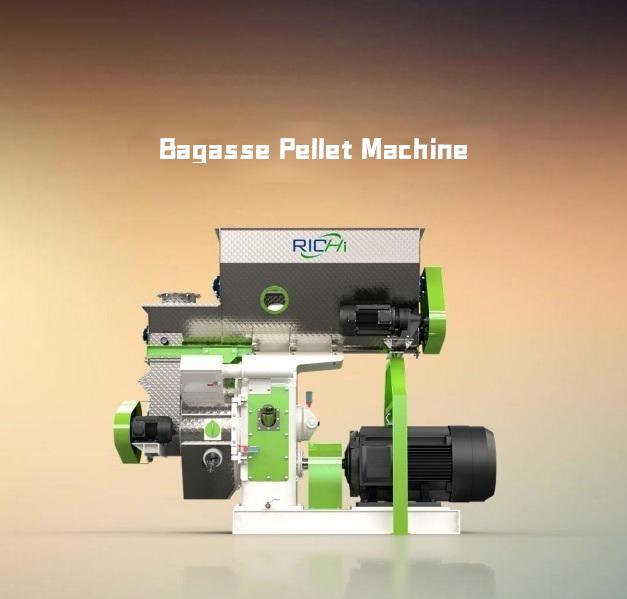
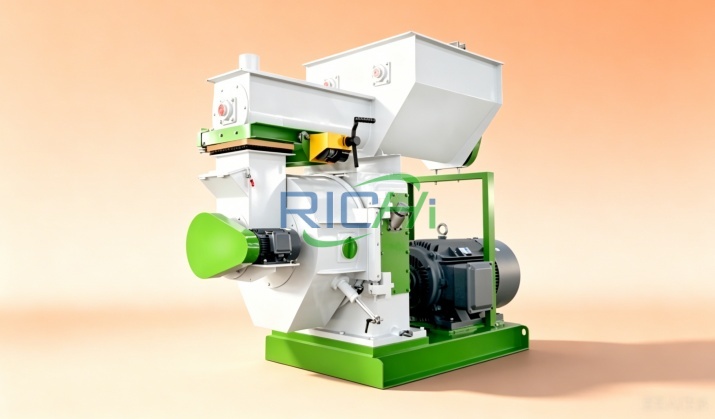
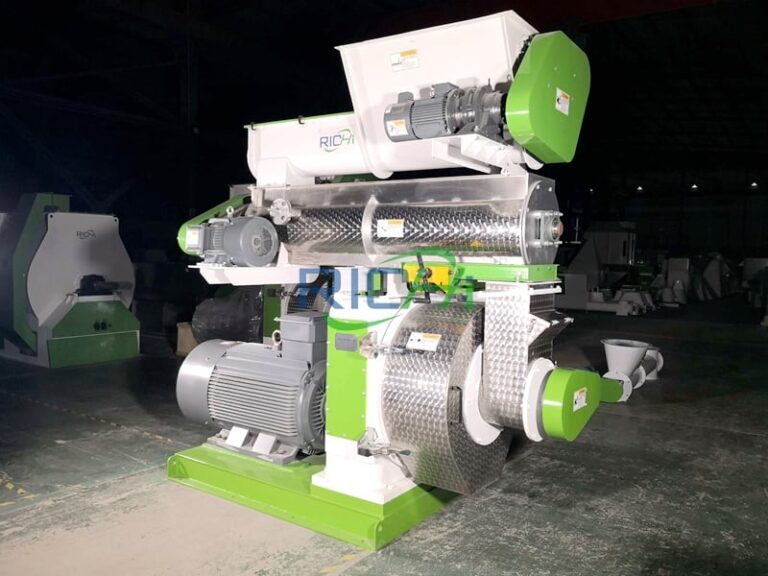
A straw pelletizer compresses prepared straw into dense cylindrical pellets.
In a ring-die pellet mill, the prepared biomass enters the compression chamber.
Rotating rollers press the material against the inner surface of the ring die.
As the rollers rotate, the straw is forced into the holes in the die.
The compressed material passes through the die holes and forms continuous strands.
Knives positioned outside the die cut these strands into pellets.
The final pellet diameter is primarily determined by the die hole diameter, while pellet length is influenced by the cutting configuration and operating conditions.
(Learn more:https://richipelletizer.com/straw-pellet-machine-for-sale/)
How Does a Straw Pelletizer Work?
The pelletizing mechanism relies mainly on mechanical compression and friction.
When loose straw enters the compression zone, the rollers apply pressure to the material.
The particles become compacted as they move into the die holes.
Friction generates heat during compression.
For many biomass materials, natural lignin can soften under heat and pressure and contribute to particle bonding.
This allows straw pellets to be produced without relying entirely on external chemical binders.
However, the exact bonding behavior depends on the straw species, moisture content, particle size, and operating parameters.
10. Die Selection for Straw Pelletizing
The die is one of the most important components of a pellet mill.
The die determines the diameter of the pellets and contributes to the compression conditions inside the machine.
Different biomass materials may require different die specifications.
Factors to consider include:
- Raw material type
- Moisture
- Fiber structure
- Pellet diameter
- Required density
- Production capacity
- Machine model
A die that works well for wheat straw may not necessarily provide the same results with rice straw or corn stalks.
Therefore, die selection should be based on actual material characteristics.
What Is Die Compression Ratio?
The die compression ratio describes the relationship between the effective compression length and die hole diameter.
A higher compression ratio generally means that the material experiences stronger resistance as it passes through the die.
Different materials require different compression conditions.
Straw is fibrous and can behave differently from sawdust or other woody biomass.
Using an unsuitable compression ratio may cause:
- Low output
- High energy consumption
- Die blockage
- Poor pellet durability
- Excessive wear
For this reason, professional pellet mill selection should consider both the material and the die.
11. Pellet Cooling
Fresh pellets leave the pellet mill at an elevated temperature.
They also contain residual moisture and may still be relatively soft.
Cooling is therefore an essential step.
A pellet cooler reduces the temperature of the finished pellets and helps stabilize their structure.
Counterflow coolers are widely used in industrial pellet production.
During cooling, ambient air passes through the hot pellets and removes heat and moisture.
Proper cooling can improve:
- Pellet hardness
- Storage stability
- Packaging conditions
- Product temperature
- Handling performance
Pellets should generally be cooled before they are packaged or placed into long-term storage.
12. Pellet Screening
After cooling, pellets are usually screened.
Screening removes fines and broken pellets from the finished product.
A vibrating screen or rotary screen can be used depending on the production line design.
The screening process helps produce a more uniform commercial product.
Fines can often be returned to the production process, reducing material loss.
This recycling approach can improve overall raw material utilization.
13. Pellet Packaging
The final stage is packaging.
Depending on the scale of the plant and market requirements, straw pellets can be:
- Packed in small bags
- Packed in large bags
- Loaded into bulk trucks
- Stored in silos
Packaging protects the pellets from moisture and contamination.
For retail or small commercial users, bagged pellets may be more convenient.
For industrial biomass fuel consumers, bulk transportation may be more economical.
What Equipment Is Used in a Straw Pelletizing Line?
A complete straw pelletizing line may include the following equipment:
Bale Breaker
Breaks compressed straw bales into loose material.
Straw Shredder
Cuts long straw fibers into shorter pieces.
Magnetic Separator
Removes ferrous metal contaminants.
Rotary Dryer
Reduces excessive moisture in the straw.
Hammer Mill
Grinds the dried straw into a suitable particle size.
Storage Hopper
Provides temporary material storage and helps stabilize feeding.
Conveyor System
Transfers material between different processing stages.
Straw Pelletizer
Compresses prepared straw into finished pellets.
Pellet Cooler
Reduces pellet temperature and stabilizes the product.
Vibrating Screen
Separates finished pellets from fines and broken particles.
Packing Machine
Weighs and packs finished pellets for transportation and sale.
Dust Collection System
Collects dust generated during shredding, grinding, screening, and other processing stages.
The final equipment configuration should be customized according to raw material characteristics and plant capacity.
What Factors Affect Straw Pellet Quality?
Pellet quality is influenced by multiple factors.
Moisture Content
Incorrect moisture can cause poor bonding, soft pellets, excessive fines, or unstable production.
Particle Size
Particles should be small and uniform enough for effective compression without unnecessary grinding.
Raw Material Type
Different straw species have different fiber structures and chemical compositions.
Die Compression Ratio
The die must provide appropriate resistance for the specific biomass.
Roller Condition
Worn rollers can reduce compression efficiency.
Feeding Rate
The pellet mill needs a stable and appropriate feed rate.
Cooling
Insufficient cooling can result in hot and unstable pellets.
Screening
Effective screening removes fines and improves product uniformity.
How to Improve Straw Pelletizing Efficiency
Improving pellet production efficiency requires attention to the complete production line rather than only the pelletizer.
Maintain Stable Moisture
Monitor moisture before and after drying.
Optimize Particle Size
Avoid both excessive particle size and unnecessary over-grinding.
Select the Correct Die
Match the die compression conditions to the straw type.
Maintain Rollers and Dies
Regularly inspect wear components and replace them when necessary.
Keep Feeding Stable
Avoid sudden changes in material flow.
Optimize Cooling
Make sure pellets are sufficiently cooled before screening and packaging.
Control Material Contamination
Remove stones, metal, plastic, and other foreign materials before they reach the pellet mill.
Use Appropriate Automation
Larger plants can use automated control systems to monitor temperature, material flow, motor load, and other operating conditions.
What Problems Can Occur During Straw Pelletizing?
Several common problems may occur if process parameters are not properly controlled.
Soft Pellets
Soft pellets may result from unsuitable moisture, insufficient compression, incorrect die selection, or poor raw material preparation.
Excessive Fines
High fines may indicate poor pellet formation, inadequate cooling, excessive handling, or inappropriate operating parameters.
Die Blocking
Die blockage can occur when moisture, particle size, feeding rate, or compression conditions are unsuitable.
Low Capacity
Low output may result from insufficient grinding, unstable feeding, excessive moisture, inappropriate die specifications, or worn components.
High Energy Consumption
High electricity consumption may be associated with excessive grinding, inefficient drying, worn pelletizing components, or unsuitable operating conditions.
These problems demonstrate why a straw pellet plant should be treated as an integrated processing system.
Small-Scale vs Commercial Straw Pelletizing
The equipment requirements depend heavily on production scale.
A small agricultural operation may use a simple system consisting of:
Straw preparation → Grinding → Pelletizing → Cooling → Screening
A commercial straw pellet plant may require:
Bale receiving → Cleaning → Bale breaking → Shredding → Drying → Grinding → Buffer storage → Feeding → Pelletizing → Cooling → Screening → Packaging
Large plants may also include automated control systems, centralized lubrication, dust collection, fire protection, and automated material handling.
The appropriate configuration should be based on actual production requirements rather than simply selecting the largest available equipment.
How to Choose a Straw Pelletizer
When selecting a straw pelletizer, several technical factors should be considered.
Raw Material
Identify the exact straw type and its physical characteristics.
Capacity
Determine the required hourly production output.
Pellet Diameter
Select the pellet size according to the target market and combustion equipment.
Moisture
Know the moisture range of the incoming material and determine whether a dryer is necessary.
Particle Size
Confirm the required grinding specification.
Die Design
Select a suitable die compression ratio for the material.
Wear Resistance
Straw can contain abrasive particles, particularly when field residues contain soil or sand.
Wear-resistant rollers and dies can help maintain stable performance.
Maintenance
Consider accessibility to wear components and the availability of replacement parts.
Automation
For larger production lines, automated monitoring and control can improve process stability and reduce manual intervention.
(see this website:RICHI Pelletizer)
Is Straw Pelletizing a Good Way to Use Agricultural Waste?
Straw pelletizing can provide a practical utilization route for agricultural residues where there is sufficient raw material supply and a suitable market for biomass fuel.
The biggest advantage is densification.
Loose straw is difficult to transport, store, and feed.
Pellets are compact, standardized, and easier to handle.
However, the economics of straw pelletizing depend on several factors, including raw material collection costs, transportation distance, drying requirements, electricity consumption, equipment investment, labor, maintenance, and the local value of biomass fuel.
Therefore, a feasibility assessment should be completed before investing in a commercial plant.
Conclusion
The straw pelletizing process converts agricultural residues into compact biomass pellets through a series of preparation and compression stages.
The typical process is:
Collection → Cleaning → Bale Breaking → Shredding → Drying → Grinding → Moisture Adjustment → Pelletizing → Cooling → Screening → Packaging
Each step has an important role.
Cleaning protects the equipment. Shredding reduces long fibers. Drying controls moisture. Grinding creates a suitable particle size. Feeding stabilizes the material flow. The straw pelletizer then applies mechanical compression to form dense pellets. Cooling stabilizes the newly produced pellets, while screening and packaging prepare the final product for storage, transportation, and use.
Successful straw pellet production therefore depends on the coordination of the entire production line.
By selecting suitable equipment, controlling moisture and particle size, matching the die to the raw material, maintaining rollers and dies, and optimizing cooling and screening, agricultural residues such as wheat straw, rice straw, corn stalks, and barley straw can be converted into a more convenient and manageable biomass fuel.
For projects with abundant agricultural residues, a customized straw pellet production line can provide a systematic approach to waste utilization while creating a standardized solid biomass product for compatible heating and industrial fuel applications.