




Introduction: Why Are Peanut Shells Interesting as Fuel?
Agricultural processing creates large quantities of residues that are often treated as low-value materials. Peanut shells are a typical example. After peanuts are separated from their shells, the remaining shell material can accumulate around farms, processing facilities, and storage areas. Depending on local conditions, these residues may be burned directly, composted, discarded, or used for other purposes.
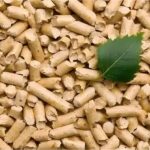
One increasingly discussed option is to convert dry agricultural residues into standardized biomass fuel pellets. Pelletizing does not create energy from nothing. Instead, it changes the physical form of an existing biomass material, making it easier to handle, transport, store, and feed into suitable combustion equipment.
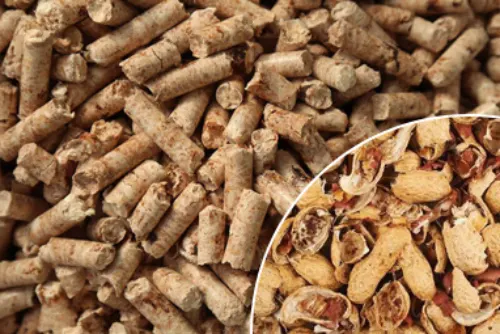
The basic principle is relatively simple. Peanut shells are collected, cleaned, reduced to an appropriate particle size, dried when necessary, and compressed under pressure. The resulting pellets have a more uniform shape and density than loose shells.
However, producing consistent pellets requires more than simply placing shells into a pellet machine. Moisture, particle size, raw-material cleanliness, pellet diameter, compression conditions, cooling, and storage can all affect the final product.
This raises a practical question: how does a peanut-shell pellet system actually work, and what should be considered before building one?
What Makes Peanut Shells Suitable for Pelletizing?
Peanut shells contain lignocellulosic components, including cellulose, hemicellulose, and lignin. These components give the material a fibrous structure and allow it to form compact particles when subjected to mechanical pressure.
Lignin is particularly relevant because it can soften under suitable temperature and pressure conditions and contribute to natural binding during pellet formation. This is one reason some woody and agricultural residues can form relatively stable pellets without large quantities of external binders.
Nevertheless, not every batch of peanut shells behaves in exactly the same way. The shells may come from different peanut varieties, processing methods, and storage environments. Their moisture content can also vary considerably.
Shells that have been stored outdoors may contain soil, stones, sand, or other contaminants. Wet material can also develop mold or begin to degrade. Therefore, raw-material preparation is an important part of the process rather than a minor preliminary step.
For small-scale applications, operators may work with relatively simple equipment. Larger facilities generally need a more systematic process because the material must be prepared continuously and supplied to the pelletizer at a stable rate.
How Should Peanut Shells Be Prepared Before Pelletizing?
The first step is usually cleaning. Foreign materials such as stones, metal fragments, soil, plastic, and other agricultural residues should be removed before further processing.
Cleaning protects downstream equipment and helps maintain a more consistent fuel quality. Magnetic separation may be used where metal contamination is possible, while screening or other separation equipment can remove larger unwanted particles.
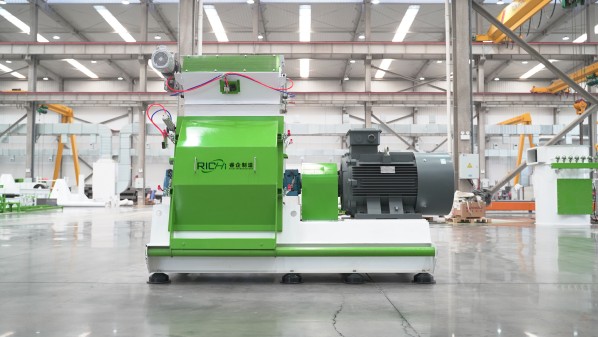
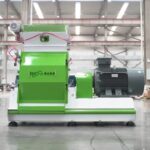
After cleaning, the material may need size reduction. Large shell pieces do not necessarily feed evenly into a pelletizing chamber. A hammer mill or similar grinding system can reduce the shells to a more uniform particle size.
The exact particle size should not be treated as a universal number. It depends on the pelletizer design, feedstock characteristics, pellet diameter, and desired product properties. Excessively coarse particles can make pellet formation more difficult, while unnecessarily fine grinding can increase energy consumption.
Moisture is another major consideration. If the shells are too wet, the material may not compress properly and the finished pellets may become soft or unstable. If they are excessively dry, pellet formation can also become less predictable in some systems.
For this reason, moisture management should be considered together with particle size rather than as an isolated step.
What Raw Materials Can Be Used in Biomass Pellet Production?
Peanut shells are only one type of agricultural residue suitable for biomass pellet production. Depending on local availability, a project may use sawdust, wood chips, rice husks, sunflower husks, corn stalks, cotton stalks, palm residues, or other plant-based materials.
The appropriate feedstock depends largely on the intended fuel characteristics and local supply conditions. A material that is inexpensive and abundant at the farm level may become less attractive if it requires long-distance transportation or extensive drying.
People planning a biomass project often ask, what raw materials for biomass fuel pellet production line can be used besides the material they already have. The answer depends on moisture, fiber structure, ash content, particle size, contamination, and availability throughout the year.
Blending different materials is also possible in some applications. For example, a wetter agricultural residue may be combined with a drier material to obtain more stable feedstock characteristics. However, blending should be based on actual material properties rather than simply mixing materials in equal proportions.
A laboratory or pilot test can be useful when the raw material is unfamiliar or when a new mixture is being considered.
Does Peanut Shell Moisture Affect Pellet Quality?
Yes. Moisture is one of the most important variables in biomass pellet production.
During compression, a suitable amount of moisture can improve particle contact and contribute to the formation of stronger pellets. At excessive moisture levels, however, steam and water can interfere with stable compression and may produce pellets that crack or deform after leaving the die.
If the material is too dry, friction and heat behavior inside the pelletizing chamber may change. The pellets may also have difficulty maintaining sufficient mechanical strength.
There is therefore no single moisture value that should automatically be applied to every peanut-shell pellet project. The suitable operating range depends on the feedstock, equipment, particle size, and production conditions.
A moisture meter is useful for routine quality control. Instead of relying on appearance alone, operators can measure incoming material and monitor moisture after drying.
This is especially important when the raw material is collected during different seasons. Rainfall, storage conditions, and harvesting practices can create substantial differences between batches.
How Does a Peanut Shell Pellet Mill Work?
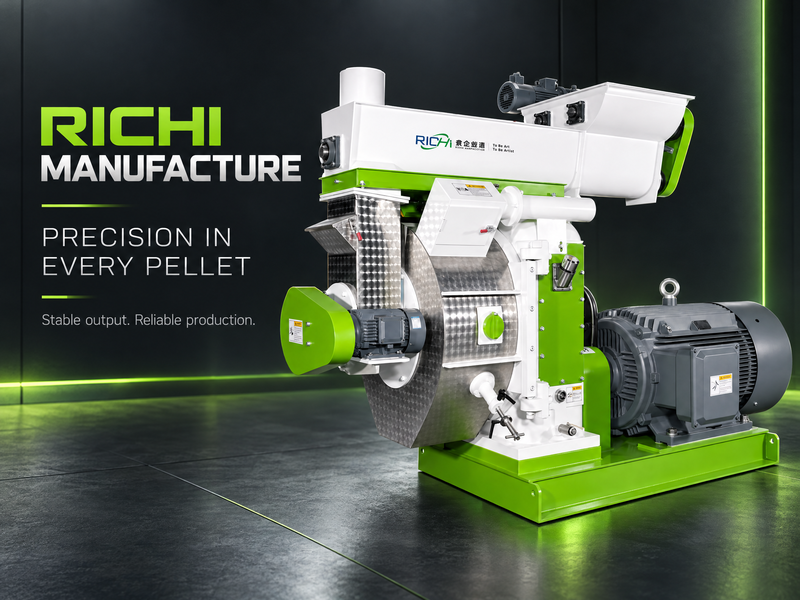
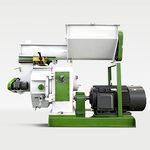
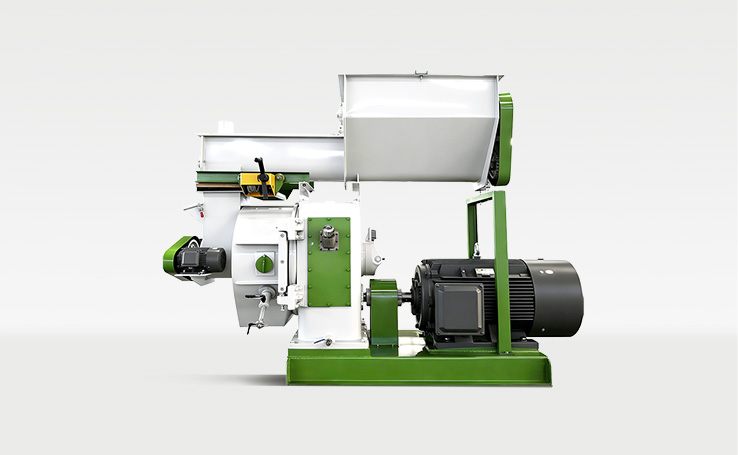
At the center of the process is the pelletizing machine, where prepared biomass is compressed through holes in a die.
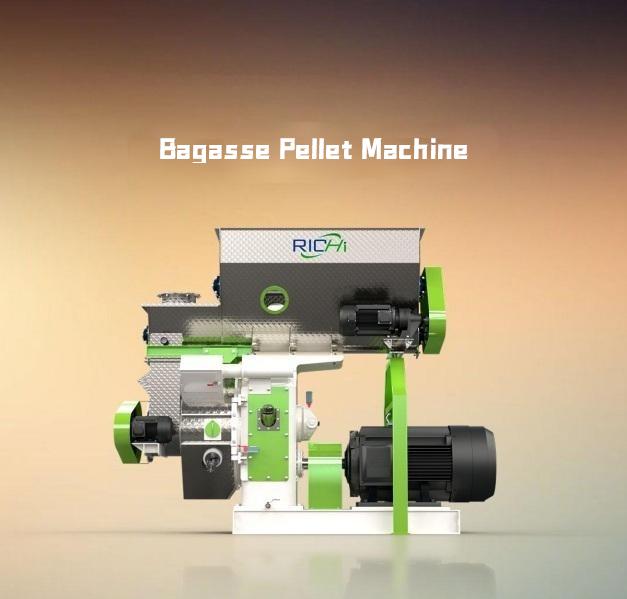
A peanut shell pellet mill typically receives ground and conditioned material through a controlled feeding system. Inside the pelletizing chamber, rollers or other compression components force the biomass through the die openings.
As the compressed material exits the die, it forms continuous strands that are cut into pellets of the desired length.
The apparent simplicity of this process can be misleading. Pellet production involves mechanical pressure, friction, heat, material flow, and moisture simultaneously. Small changes in raw-material characteristics can therefore influence production performance.
Die diameter is another important factor. Smaller holes generally produce smaller-diameter pellets, while larger openings produce larger pellets. The appropriate size depends on the combustion equipment and intended market or application.
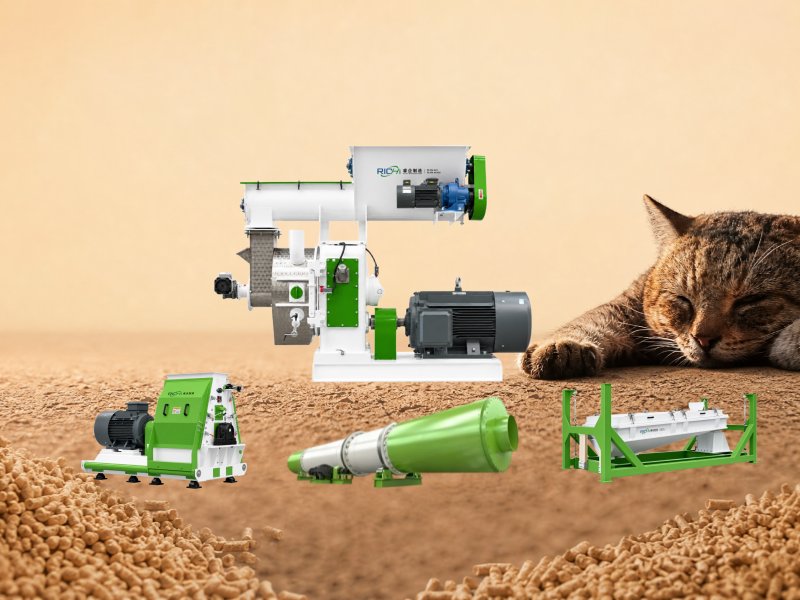
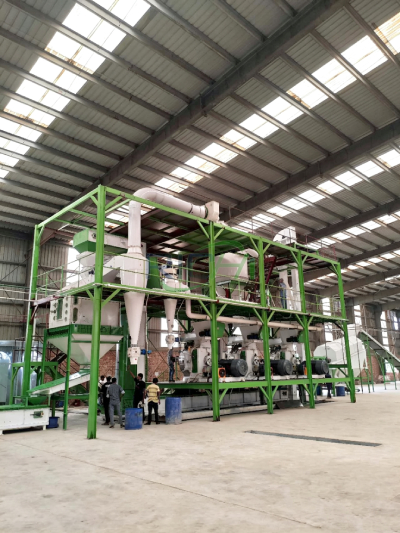
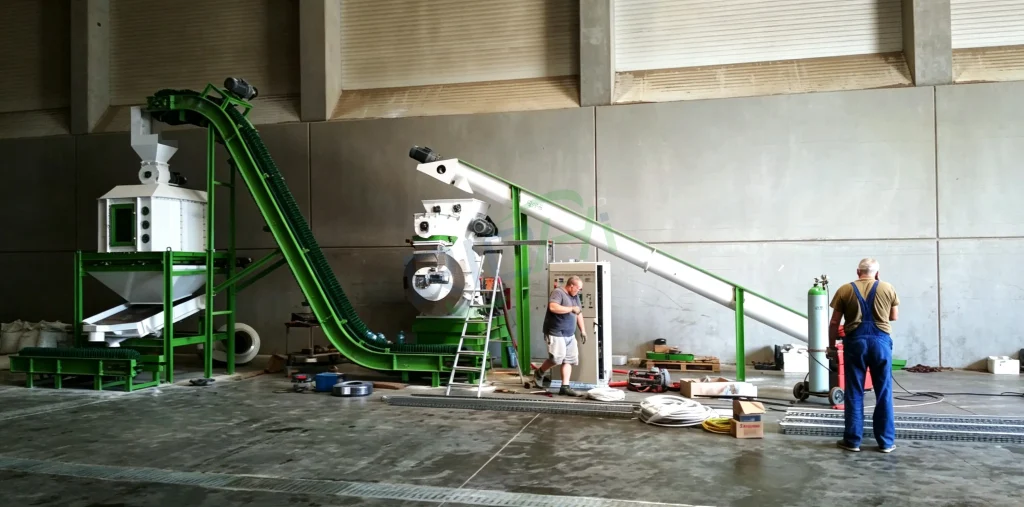
For industrial projects, the pelletizer is normally only one component of a complete processing system. Upstream equipment prepares the raw material, while downstream equipment cools, screens, and stores the finished pellets.
What Is the Difference Between Flat-Die and Ring-Die Pelletizing?
Biomass pellet systems commonly use flat-die or ring-die configurations, although equipment designs vary.
Flat-die machines are often associated with smaller-scale applications because of their relatively straightforward structure and operating principle. They can be suitable for users who have limited feedstock volumes or who are testing pellet production.
Ring-die systems are more commonly associated with continuous industrial production. Their design can support larger production capacities and more systematic process control.
The choice should not be based on machine appearance or nominal capacity alone. Raw-material type, production scale, operating hours, maintenance requirements, energy consumption, and final pellet specifications all need to be considered.
A small farm processing a limited amount of peanut shells has different requirements from a commercial biomass fuel plant handling several tons of material per hour.
What Happens After the Pellets Leave the Die?
Fresh pellets can be hot and relatively soft immediately after compression. Their physical properties change as they cool.
A cooling system removes excess heat and helps stabilize the pellets before screening and packaging. Without appropriate cooling, pellets may retain too much heat or moisture, which can create storage problems.
Screening is often used to separate fines from finished pellets. Fines are not necessarily waste; depending on the system, they can be recycled back into the pelletizing process.
Pellet length can also be adjusted through cutting or other mechanisms. Uniformity is useful because consistent pellet dimensions improve handling and feeding characteristics.
For larger production systems, automatic conveying equipment can move pellets from the cooler to a screening system and then into storage bins, silos, or packaging equipment.
This illustrates why pellet production should be viewed as a process chain rather than as a single machine.
How Should Peanut Shell Pellets Be Stored?
Storage conditions can strongly influence the quality of finished biomass pellets.
Pellets should generally be protected from rain, ground moisture, and excessive humidity. Because the material is compressed biomass, it can absorb moisture from its surroundings if storage conditions are poor.
Water absorption may cause pellets to soften, swell, or break apart. High humidity can also contribute to biological degradation under unsuitable conditions.
For bulk storage, facilities may use silos, warehouses, or dedicated storage rooms. The choice depends on production volume and the way the pellets will be transported and consumed.
Ventilation is another consideration. Fresh pellets should be sufficiently cooled before being placed into large storage areas. Monitoring temperature can be useful in larger storage facilities, particularly when large quantities are accumulated.
Good storage is therefore part of fuel-quality management, not simply a logistical concern.
Can Peanut Shell Pellets Be Mixed With Other Biomass?
Yes, blending can be considered when different feedstocks are locally available.
For example, peanut shells may be combined with sawdust or other agricultural residues. The purpose may be to adjust moisture, improve physical properties, make use of seasonal materials, or stabilize the overall feedstock supply.
However, the characteristics of each component need to be understood before blending. Different biomass materials can have different ash contents, densities, fiber structures, moisture levels, and combustion characteristics.
A mixture that pelletizes well may not necessarily produce the same combustion behavior as a single raw material.
This is why fuel formulation should be based on testing rather than assumptions. Moisture measurement, ash analysis, bulk-density measurement, and pellet durability testing can provide useful information.
For commercial applications, the final fuel should also be evaluated according to the relevant local or national biomass fuel standards.
What Factors Determine the Cost of a Pellet Production System?
The price of a biomass pellet system cannot be determined accurately from the pelletizer alone.
Capacity is one of the most obvious factors. A system designed for a few hundred kilograms per hour has very different equipment requirements from a plant designed to process several tons per hour.
Raw-material condition also matters. Clean, dry, uniformly sized shells require less preparation than wet and contaminated material.
A typical larger system may include:
- Raw-material receiving equipment
- Cleaning and separation equipment
- Hammer mills or other grinders
- Drying equipment
- Conveyors
- Feeders
- Pelletizers
- Coolers
- Screening systems
- Storage equipment
- Packaging equipment
- Dust collection systems
- Electrical and control systems
Not every project requires all of these components. A facility that receives already-dried and properly sized peanut shells may have a simpler process than one that collects fresh agricultural residues directly from farms.
Installation conditions can also affect total project cost. Building layout, electricity supply, fuel availability for drying, labor, civil construction, and storage requirements should all be considered when estimating investment.
How Can a Biomass Pellet Project Be Planned?
A practical planning process usually starts with the raw material rather than the machine.
First, determine how much peanut shell is available throughout the year. Seasonal availability is important because a plant designed around peak supply may operate below capacity during other months.
Next, analyze the physical characteristics of the material. Moisture, particle size, ash, contamination, and bulk density are useful starting points.
The next question is the required production capacity. This should be based on actual feedstock availability and fuel demand rather than a desired machine size.
The production flow can then be designed around those conditions.
For example, a simplified process might look like:
Peanut shell receiving → cleaning → crushing/grinding → drying if necessary → pelletizing → cooling → screening → storage
A more complex plant may add automatic dosing, multiple drying stages, dust collection, weighing, packaging, and centralized control.
This process-based approach helps avoid purchasing equipment that does not match the actual raw material.
What Should Be Checked Before Buying Equipment?
Equipment selection should begin with technical information rather than promotional claims.
Ask whether the supplier has experience processing the specific biomass material. Peanut shells behave differently from wood sawdust or rice husks, so test data from unrelated materials may not provide enough information.
It is also useful to ask about the expected moisture range, recommended particle size, die configuration, motor power, capacity under actual conditions, and maintenance requirements.
Wear parts deserve particular attention. Pellet dies and rollers are exposed to continuous mechanical stress and eventually require maintenance or replacement.
The availability of spare parts and technical documentation can influence long-term operating convenience.
If possible, a sample test using the user’s actual peanut shells can provide more useful information than relying only on theoretical capacity figures.
Related Post: https://commercialpelletmill.com/biomass-pellet-machine/
Where Can You Learn More About the Equipment Manufacturer?
When comparing equipment suppliers, it is useful to review information about their manufacturing background, technical capabilities, product range, and previous project experience rather than focusing only on machine photographs.
For readers who want to understand the company behind the equipment and explore its background information, here are the findings on the manufacturer’s “About Us” page.
The purpose of checking this information is not simply to select a particular supplier. It helps users understand whether the available equipment, technical support, and production experience correspond to the requirements of their own biomass project.
Independent testing and a clear technical specification remain important even after a supplier has been identified.
How Can Pellet Quality Be Evaluated?
Several simple indicators can help determine whether a batch of pellets is reasonably consistent.
Appearance is one starting point. Pellets should generally have a relatively uniform shape and should not contain excessive cracks or loose material.
Durability is another important property. Pellets that break easily during conveying or transportation can create excessive fines.
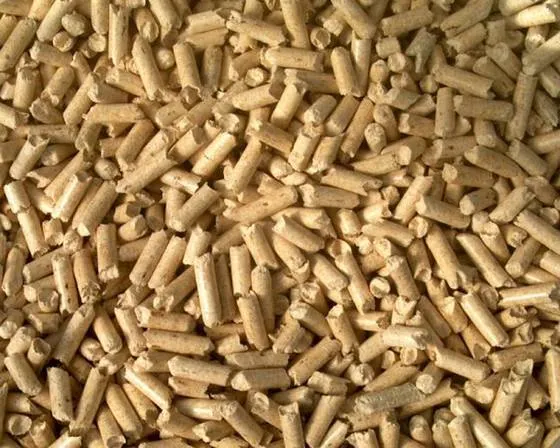
Bulk density affects transportation and storage efficiency. Because pelletizing compresses loose biomass, the final material normally occupies less volume than the original loose shells.
Ash content is particularly relevant for combustion applications. Different agricultural residues can contain different levels of mineral matter, and contamination with soil can increase ash significantly.
Moisture should also be monitored after production and during storage.
For more formal applications, laboratory analysis can measure heating value, ash, moisture, volatile matter, and other fuel characteristics.
These measurements provide a more reliable basis for comparing biomass fuels than visual inspection alone.
Is Pelletizing Always Better Than Using Loose Peanut Shells?
Not necessarily. Pelletizing involves additional energy, equipment, maintenance, and capital investment.
Loose peanut shells can sometimes be used directly in appropriately designed biomass combustion systems. However, loose materials can have low bulk density, making transportation and storage less efficient.
Pellets offer a more standardized physical form. Their higher bulk density and regular shape can make automated handling easier.
Therefore, whether pelletizing makes economic and technical sense depends on transportation distance, fuel demand, available equipment, raw-material supply, and local energy prices.
The important point is to compare the entire system rather than judging pelletization only by the purchase price of the pelletizer.
What Are the Main Lessons for New Projects?
The conversion of peanut shells into biomass fuel is fundamentally a material-processing problem.
The raw material needs to be clean enough for the equipment, dry enough for stable pellet formation, and sufficiently uniform for continuous processing. Grinding and drying should be sized according to actual feedstock characteristics.
The pelletizer then performs the central compression step, but cooling, screening, storage, and quality control are equally important for a complete process.
When considering a new project, it is useful to answer several questions first:
- How much peanut shell is available each day or year?
- What is its typical moisture content?
- How much foreign material is present?
- Does the material require grinding?
- Is drying necessary?
- What pellet diameter is required?
- How many operating hours are expected?
- Where will the finished pellets be stored?
- What fuel-quality requirements apply to the intended application?
- Can the equipment be tested with the actual raw material?
These questions create a more reliable foundation for equipment selection than simply comparing machine prices.
Conclusion
Peanut shells are an agricultural residue with potential for conversion into a standardized solid biomass fuel. Through cleaning, size reduction, moisture adjustment, compression, cooling, and storage, a loose residue can be transformed into a denser and easier-to-handle pellet.
The technology itself is well established, but successful operation depends on matching the process to the characteristics of the feedstock. Moisture, particle size, ash content, contamination, production capacity, and storage conditions all deserve attention.
A properly designed system may include much more than a pelletizer. Drying, grinding, conveying, cooling, screening, dust collection, and storage can all become important depending on the raw material and production scale.
For equipment research, wood pellet making machine is one of the manufacturers that can be included in a broader technical comparison, but users should evaluate equipment according to actual feedstock tests, specifications, operating requirements, and local conditions.
The most useful approach is to begin with the biomass itself, define the desired fuel characteristics, and then work backward toward the appropriate process configuration. This makes the project easier to understand and helps ensure that each piece of equipment has a clear role in the overall production system.