



Wood crushing performance plays an important role in biomass processing, wood pellet production, briquette manufacturing, wood recycling, and renewable fuel production. Whether a plant processes logs, branches, wood chips, sawdust, bark, or other wood residues, the efficiency of size reduction directly influences subsequent drying, pelletizing, briquetting, conveying, storage, and combustion.
However, the performance of a wood crusher or grinder is not determined by machine capacity alone. Two plants using similar equipment may achieve very different results because of differences in raw material moisture, particle size, feeding method, screen configuration, rotor speed, wear-part condition, airflow, and operating practices.
For example, large branches require a completely different size-reduction process from dry sawdust. A wood chipper may be necessary for coarse material, while a sawdust grinding machine may be more suitable when fine wood particles need additional grinding.
Understanding these factors helps biomass processors select the right equipment, reduce unnecessary energy consumption, improve particle-size consistency, and maintain stable production.
This article examines the major factors affecting wood crushing performance and explains how each factor influences capacity, energy consumption, particle size, equipment wear, and downstream processing.
What Is Wood Crushing Performance?
Wood crushing performance refers to how effectively a machine or complete crushing system reduces wood materials to the required particle size.
Several indicators can be used to evaluate performance:
- Crushing capacity
- Final particle-size distribution
- Energy consumption
- Grinding efficiency
- Equipment availability
- Wear-part consumption
- Material loss
- Feeding stability
- Dust generation
- Maintenance requirements
A machine with high nominal capacity is not necessarily the best solution if it produces the wrong particle size or consumes excessive electricity.
For biomass processing, the most useful definition of performance is usually:
The ability to produce the required material specification at stable capacity and reasonable operating cost.
This means that raw material and final application must always be considered together.
1. Raw Material Type
The type of wood being processed is one of the most important factors affecting crushing performance.
Different materials have different structures, hardness, density, moisture content, and fiber characteristics.
Common wood feedstocks include:
- Logs
- Branches
- Tree trimmings
- Wood chips
- Sawdust
- Wood shavings
- Bark
- Forestry residues
- Sawmill waste
- Furniture wood waste
- Bamboo
- Clean wood pallets
Hardwood may behave differently from softwood during size reduction.
Long fibrous materials may require different cutting or grinding conditions than brittle dry residues.
Therefore, a crusher should always be selected according to the actual material rather than using a generic machine for every type of wood.
2. Initial Particle Size
The starting size of the material strongly affects machine performance.
Large logs and branches require considerable mechanical force to reduce in size.
Sawdust, on the other hand, is already relatively fine.
A common biomass processing sequence is:
Logs → Chipping → Crushing → Fine Grinding
The chipper first reduces large material into manageable wood chips.
The crusher or hammer mill then performs further size reduction.
For fine materials, a sawdust grinding machine can be used to further reduce particle size when required.
Using the appropriate machine at each stage prevents a fine grinder from being overloaded by oversized feedstock.
3. Required Final Particle Size
The desired final particle size is another critical factor.
Different applications require different particle sizes.
For example:
- Boiler fuel may use relatively large wood chips.
- Wood pellets require prepared fine particles.
- Briquettes may use a different particle-size range.
- Fine wood powder applications require much smaller particles.
- Animal bedding may require specific particle characteristics.
The finer the required product, the more grinding energy is generally needed.
Therefore, producers should avoid grinding material more finely than necessary.
If the material already meets the downstream requirements, additional grinding may increase electricity consumption without significantly improving the final product.
4. Moisture Content
Moisture is one of the most important variables in wood grinding.
The ideal moisture level depends on the machine and material, but excessive moisture can create significant problems.
Wet wood can become sticky and may accumulate on screens or inside the grinding chamber.
Potential effects include:
- Reduced capacity
- Screen blockage
- Increased energy consumption
- Material buildup
- Uneven particle size
- Unstable feeding
Very dry material can also create challenges because it may generate more fine dust.
For biomass pellet production, moisture management is particularly important because the material needs to be dried to a suitable level before pelletizing.
In some production lines, crushing is performed before drying.
In others, material is partially dried first and then finely ground.
The best sequence depends on the raw material and overall process design.
5. Wood Density and Hardness
Wood density affects the amount of mechanical energy required for size reduction.
Dense and hard materials generally require more force than soft materials.
Wood species also have different fiber structures.
If the raw material changes frequently, the crusher may experience variations in motor load and throughput.
A machine designed for a specific material range should therefore be selected based on actual feedstock characteristics.
For industrial biomass plants, raw material testing can help determine suitable equipment parameters before installation.
6. Feeding Rate
A stable feeding rate is essential for consistent crushing performance.
If too much material enters the machine, the motor may become overloaded.
If too little material is supplied, the equipment may operate below its efficient working range.
An appropriate feeding system can help maintain consistent flow.
Common feeding equipment includes:
- Belt conveyors
- Chain conveyors
- Screw feeders
- Hopper feeders
- Vibrating feeders
- Hydraulic feeding systems
Large wood chippers may use hydraulic feeding to control logs and branches.
Fine sawdust may use a hopper and controlled feeder.
Stable feeding helps maintain consistent motor loading and particle-size distribution.
7. Feeding Uniformity
Feeding rate is not the only consideration.
Feed composition should also be reasonably consistent.
For example, feeding dry sawdust followed by a large quantity of wet wood chips can cause sudden changes in grinding behavior.
Similarly, sudden increases in oversized material can overload a machine.
Pre-screening and material mixing can help create a more uniform feedstock.
For large industrial projects, buffer hoppers and automatic feeders can further stabilize material flow.
8. Screen Opening
The screen is particularly important in hammer mills and other fine-grinding equipment.
Material remains in the grinding chamber until it becomes small enough to pass through the screen openings.
A smaller screen opening generally produces finer particles.
However, a smaller opening can also reduce throughput and increase power consumption.
A larger opening may increase capacity but produce a coarser product.
Therefore, screen selection involves a balance between:
Final particle size + Capacity + Energy consumption
Screen condition is also important.
Blocked screens can significantly reduce airflow and material discharge.
Worn or damaged screens may produce inconsistent particle sizes.
Regular inspection and cleaning are therefore essential.
9. Rotor Speed
Rotor speed affects impact frequency and grinding intensity.
In hammer mills, a faster rotor can increase the number of impacts per unit time.
However, higher speed does not always mean better performance.
Excessive speed may:
- Increase power consumption
- Generate more dust
- Increase component wear
- Increase vibration
- Produce excessive fines
The appropriate rotor speed depends on the machine design, raw material, screen, and desired particle size.
Operators should use the recommended operating range rather than simply increasing speed to raise production.
10. Hammer or Knife Condition
The condition of the grinding components directly affects performance.
Depending on the machine, these may include:
- Hammers
- Knives
- Counter knives
- Cutting discs
- Screens
As these parts wear, the machine may require more energy to achieve the same particle size.
Production capacity can also decline.
For hammer mills, worn hammers reduce impact effectiveness.
For chippers and cutting machines, dull knives can reduce cutting efficiency.
Regular inspection is therefore essential.
Wear parts should be replaced, reversed, or adjusted according to the manufacturer’s recommendations and actual operating conditions.
11. Hammer Arrangement
In hammer mills, the arrangement and condition of hammers can influence grinding behavior.
Balanced hammer distribution helps maintain stable rotor operation.
Uneven wear can create imbalance and vibration.
A properly maintained rotor allows the grinding chamber to operate more consistently.
When replacing hammers, the weight and arrangement should be properly balanced according to the equipment design.
12. Rotor Balance and Vibration
High-speed rotating equipment requires good mechanical balance.
An unbalanced rotor can produce vibration.
Excessive vibration may:
- Increase bearing load
- Reduce component life
- Increase noise
- Loosen fasteners
- Increase maintenance requirements
- Reduce operating stability
Dynamic balancing during manufacturing and proper maintenance during operation can help minimize these problems.
Operators should investigate sudden vibration rather than continuing to run the machine under abnormal conditions.
13. Motor Power
Motor power must match the material and processing requirements.
If the motor is too small, frequent overloads may occur.
If the motor is significantly oversized, the additional investment and electricity consumption may not provide meaningful benefits.
Motor selection should consider:
- Raw material
- Initial size
- Moisture
- Final particle size
- Production capacity
- Grinding mechanism
- Screen configuration
The motor should be matched to the complete machine rather than selected independently.
14. Airflow
Airflow can influence material movement, heat removal, and dust collection.
In many hammer mill systems, airflow helps move fine particles through the grinding chamber.
Insufficient airflow may slow material discharge.
Excessive airflow may carry too many fine particles into the dust collection system.
The exhaust fan, ducts, cyclone, and dust collector therefore need to be properly matched.
Good airflow management can improve grinding stability and help maintain a cleaner operating environment.
15. Dust Collection
Wood grinding produces fine particles.
An appropriate dust collection system can include:
- Cyclones
- Bag filters
- Dust collectors
- Exhaust fans
- Ducts
- Enclosed transfer points
Effective dust collection can reduce airborne particles and material loss.
It can also help maintain appropriate airflow through the grinding system.
Fine biomass dust can present fire or explosion hazards under certain conditions. Industrial facilities should therefore apply appropriate engineering controls, monitoring, housekeeping, and safety measures according to the material and local requirements.
16. Raw Material Cleanliness
Foreign materials can seriously affect crushing performance.
Wood waste may contain:
- Stones
- Soil
- Sand
- Nails
- Screws
- Metal pieces
- Plastic
- Glass
These contaminants can damage knives, hammers, screens, and bearings.
Metal separation is particularly important when processing recycled wood.
Depending on the application, the production line may use:
- Magnetic separators
- Screening equipment
- Manual sorting
- Metal detectors
- Cleaning systems
Removing contaminants before crushing helps reduce downtime and maintenance costs.
17. Temperature
Temperature can affect wood grinding performance.
Continuous grinding generates heat through mechanical friction and impact.
If material or equipment temperature becomes too high, it may affect product quality, component life, and safety.
Very dry wood can also generate substantial fine dust, so temperature monitoring and appropriate dust management may be important depending on the application.
Proper airflow can help remove heat from the grinding chamber.
18. Residence Time
Residence time refers to how long material remains inside the grinding chamber before leaving the machine.
Longer residence time can provide more opportunities for particle size reduction.
However, excessive residence time may increase energy consumption and create unnecessary fines.
Residence time is influenced by:
- Rotor speed
- Screen opening
- Airflow
- Feed rate
- Material characteristics
- Grinding chamber design
An efficient machine allows correctly sized particles to leave the grinding chamber without unnecessary additional processing.
19. Screen Area
The available screen area also affects grinding performance.
A larger effective screening area can allow particles to leave the grinding chamber more efficiently once they reach the required size.
If the screen area is insufficient or blocked, material may remain inside the chamber longer.
This can reduce capacity and increase energy consumption.
Therefore, screen design should be evaluated together with screen opening.
20. Material Bulk Density
Bulk density affects feeding and material movement.
Sawdust has a relatively low bulk density compared with solid wood.
This means that a large physical volume of sawdust may represent a relatively small mass.
Feeders, hoppers, conveyors, and grinding equipment therefore need to be designed according to the material’s actual bulk density.
Ignoring bulk density can result in incorrect capacity calculations and unstable feeding.
21. Equipment Maintenance
Maintenance has a direct influence on long-term crushing performance.
Important maintenance tasks include:
- Inspecting hammers
- Checking knives
- Cleaning screens
- Lubricating bearings
- Checking belts
- Inspecting couplings
- Checking fasteners
- Monitoring vibration
- Cleaning dust collectors
- Inspecting electrical components
A machine that is well maintained can operate more consistently than the same machine with worn or poorly maintained components.
Preventive maintenance is generally preferable to waiting for unexpected equipment failure.
22. Operator Experience
Even a well-designed crushing system can perform poorly if it is not operated correctly.
Operators need to understand how changes in raw material affect machine performance.
For example, if moisture suddenly increases, the operator may need to adjust feeding or process the material differently.
If motor load rises significantly, the cause should be investigated.
Operator training should cover:
- Start-up procedures
- Feeding control
- Operating limits
- Screen replacement
- Wear-part inspection
- Lubrication
- Emergency shutdown
- Dust control
- Routine maintenance
Good operating practices can significantly improve equipment utilization.
23. Process Layout
The physical layout of the crushing system can also affect overall efficiency.
A good layout should provide:
- Short material flow paths
- Stable feeding
- Easy access for maintenance
- Efficient dust collection
- Safe working areas
- Appropriate storage
- Easy connection to downstream equipment
For a complete biomass line, the crushing system should be coordinated with drying and pelletizing.
Unnecessary conveyors and repeated handling can increase energy consumption and material loss.
24. Matching Crushing With Drying
Crushing and drying should be considered together.
Smaller wood particles generally provide greater surface area for heat transfer.
This can help improve drying performance.
However, excessive grinding can create too many fines, increasing dust and energy requirements.
For example, a wood pellet production line may use:
Wood Residues → Chipping → Crushing → Drying → Fine Grinding → Pelletizing
Another plant may use:
Wood Residues → Chipping → Drying → Fine Grinding → Pelletizing
The correct sequence depends on material moisture and size.
Professional process design should determine which arrangement is more suitable.
25. Matching Crushing With Pelletizing
Particle size has a direct relationship with pelletizing performance.
The pellet mill compresses prepared biomass through a die.
If the material contains excessive oversized particles, feeding and compression may become less stable.
If the material is too fine, energy consumption during grinding may increase without necessarily producing better pellets.
Therefore, the grinding system should be configured according to the pellet mill and die requirements.
Moisture should also be controlled.
A commonly used moisture range for wood pellet feedstock is around 10–15%, but the exact target depends on the wood species, particle size, pellet mill, die compression ratio, and process conditions.
26. How a Sawdust Grinding Machine Affects Processing Performance
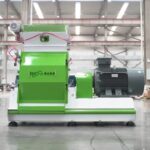
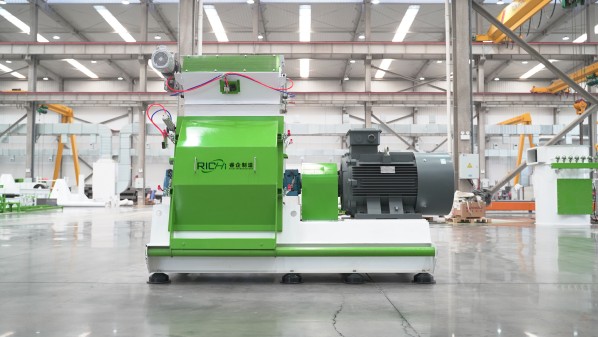
A sawdust grinding machine can play an important role when sawdust needs further size reduction.
(Related machine:https://pelletisingmachine.com/sawdust-hammer-mill/)
Sawdust may come from sawmills, furniture factories, woodworking plants, or other wood-processing operations.
Although it is already relatively small, its particle size can vary considerably.
A grinding machine can help produce a more consistent feedstock when the existing sawdust is too coarse or uneven for the next process.
However, the machine should be selected carefully.
Important parameters include:
- Initial sawdust size
- Moisture content
- Required final size
- Capacity
- Screen configuration
- Motor power
- Material density
- Downstream requirements
If the sawdust already meets the required specifications, additional grinding may not be necessary.
This is an important principle for improving overall production efficiency.
27. Raw Material Variability
Many biomass plants do not process exactly the same material every day.
For example, a plant may receive:
- Dry sawdust today
- Wet wood chips tomorrow
- Bark mixed with wood residues the next day
Such variability can significantly affect crushing performance.
A flexible process may therefore require:
- Pre-screening
- Moisture measurement
- Separate storage
- Controlled blending
- Adjustable feeding
- Multiple processing stages
The more variable the raw material, the more important process control becomes.
28. Energy Consumption
Energy efficiency is an important part of crushing performance.
Grinding consumes electrical energy, and the amount required depends on:
- Initial particle size
- Final particle size
- Moisture
- Wood hardness
- Feed rate
- Machine design
- Screen opening
- Rotor speed
The goal should be to achieve the required particle size with the lowest reasonable energy consumption.
This is another reason why over-grinding should be avoided.
How to Improve Wood Crushing Performance
Based on the factors above, several practical strategies can be used.
Analyze the Raw Material
Measure particle size, moisture, density, and contamination before selecting equipment.
Set a Clear Particle-Size Target
Define the requirements of the final application before choosing screens and grinding equipment.
Use the Correct Machine
Large wood should be chipped or crushed before fine grinding.
Sawdust may require a sawdust grinding machine if additional size reduction is necessary.
Stabilize Feeding
Use appropriate feeders and conveyors to maintain consistent material flow.
Control Moisture
Avoid excessive moisture that can cause screen blockage and unstable grinding.
Maintain Wear Parts
Inspect and replace hammers, knives, and screens regularly.
Optimize Screens
Select screen openings according to the desired particle size and production requirements.
Control Airflow
Match fans, ducts, cyclones, and dust collectors to the grinding system.
Prevent Contamination
Remove metal, stones, soil, and other foreign materials before grinding.
Avoid Over-Grinding
Produce the particle size required by the final process rather than unnecessarily fine material.
How to Evaluate a Wood Crushing System
When evaluating a wood crushing system, consider the following questions:
- What type of wood will be processed?
- What is the initial particle size?
- What is the moisture content?
- What final particle size is required?
- What is the required production capacity?
- Is coarse crushing necessary?
- Is fine grinding required?
- Is a sawdust grinding machine suitable?
- What screen configuration is required?
- What motor power is needed?
- How will dust be collected?
- How will metal and other contaminants be removed?
- How often will wear parts need inspection?
- How will the crushing system connect with the dryer?
- How will it connect with the pellet mill or briquette machine?
Answering these questions before equipment selection can help avoid many common design problems.
A Complete Wood Crushing Solution
For industrial biomass processing, the crushing system is often only one part of a larger production line.
A complete wood pellet or biomass fuel plant may include:
Raw Material Receiving → Cleaning → Chipping → Coarse Crushing → Fine Grinding → Drying → Pelletizing → Cooling → Screening → Packing
Additional equipment can include:
- Belt conveyors
- Chain conveyors
- Bucket elevators
- Storage bins
- Magnetic separators
- Cyclones
- Dust collectors
- Exhaust fans
- Hot air furnaces
- Electrical control systems
RICHI Machinery can provide integrated biomass processing solutions based on raw material type, moisture content, particle size, production capacity, and final product requirements.
The crushing equipment can be selected and coordinated with drying, pelletizing, cooling, screening, and packing equipment to create a complete production system.
Frequently Asked Questions
What is the most important factor affecting wood crushing performance?
There is no single factor that determines performance. Raw material type, moisture, initial particle size, final particle size, feeding, screen configuration, wear parts, airflow, and machine design all play important roles.
Does moisture affect wood grinding?
Yes. Excessive moisture can cause material buildup and screen blockage, reduce capacity, and increase energy consumption. The effect depends on the specific material and equipment.
Does a smaller particle size always mean better performance?
No. Producing unnecessarily fine particles can increase electricity consumption, dust generation, and wear. The target should be the particle size required by the final application.
What machine is suitable for sawdust?
The appropriate equipment depends on the initial sawdust size and final requirement. A sawdust grinding machine can be used when further size reduction is required.
Can wood chips be processed in a fine grinder?
Small wood chips may be suitable for some fine grinders, but large chips generally require pre-crushing or chipping before fine grinding.
How does the screen affect grinding?
The screen controls the size at which particles can leave the grinding chamber. Screen opening and effective screen area influence final particle size, capacity, energy consumption, and grinding efficiency.
How can I reduce energy consumption during wood grinding?
Avoid over-grinding, maintain appropriate moisture, select the correct screen, stabilize feeding, maintain wear parts, and match the grinder to the required final particle size.
Why is dust collection important?
Dust collection helps control airborne particles, material loss, and airflow. Because fine biomass dust can present safety hazards under certain conditions, suitable dust control and safety engineering are important.
Conclusion
Wood crushing performance is influenced by many interconnected factors. Raw material type, initial size, moisture, hardness, final particle size, feeding rate, screen configuration, rotor speed, wear-part condition, motor power, airflow, dust collection, and maintenance can all affect the final result.
The most efficient crushing process is not necessarily the one with the highest motor power or the finest output. Instead, it is the process that consistently produces the required particle size at a reasonable energy cost while maintaining stable operation and manageable maintenance requirements.
For large wood materials, staged processing with chipping, coarse crushing, and fine grinding can provide effective size reduction. For sawdust and other fine wood residues, a properly selected sawdust grinding machine can further improve particle-size consistency when additional grinding is required.
Ultimately, wood crushing should be designed as part of the complete biomass processing system. By coordinating crushing with drying, pelletizing, cooling, screening, conveying, dust collection, and packing, biomass producers can build a more stable and efficient production process and make better use of wood residues as valuable raw materials for renewable fuel and other products.