
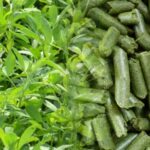
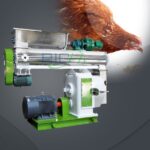

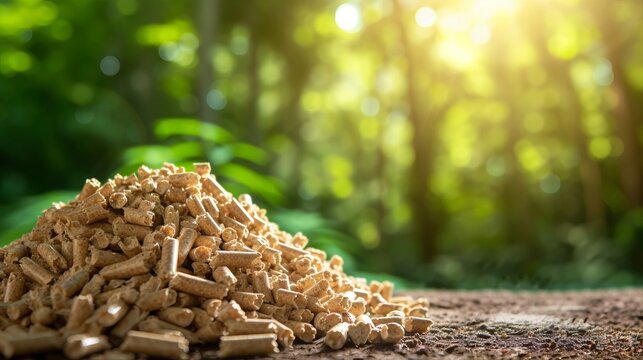
As global demand for renewable energy continues to grow, biomass pelletizing has become one of the most efficient methods for converting agricultural and forestry residues into clean, high-value solid fuel. Every year, millions of tons of wood waste, crop residues, sawdust, straw, rice husks, bagasse, and other biomass materials are generated worldwide. Without proper utilization, much of this biomass is burned in open fields or discarded, leading to environmental pollution and wasted resources.
The biomass pelletizing process transforms these low-density materials into compact, energy-dense pellets that are easier to transport, store, and use. Today, biomass pellets are widely consumed in residential heating systems, industrial boilers, combined heat and power (CHP) plants, and large-scale power stations. The pelletizing industry has become an essential part of the global transition toward sustainable energy while creating additional income opportunities for farmers, forestry companies, and biomass processing businesses.
This article explains the complete biomass pelletizing process, the equipment involved, key production factors, quality standards, and the benefits of modern pellet manufacturing technology.
Understanding Biomass Pelletizing
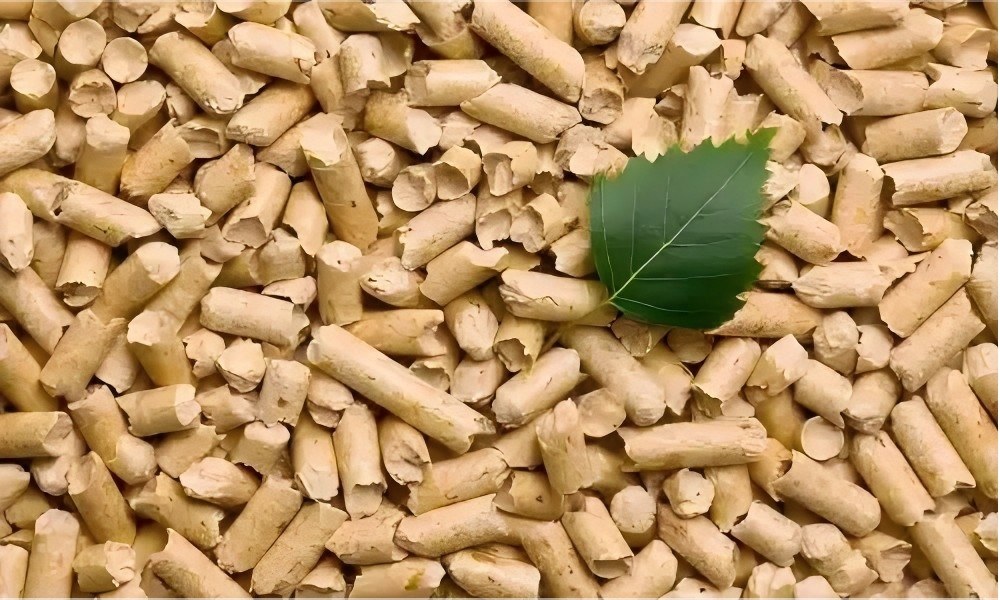
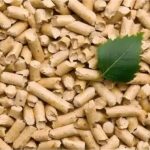
Biomass pelletizing is a mechanical densification process that compresses loose organic materials into cylindrical pellets using high pressure. During pellet formation, friction generated inside the pellet mill increases the temperature of the raw material. This heat softens the natural lignin contained in wood and many plant fibers, allowing it to act as a natural adhesive without requiring additional binders.
The result is a dense, durable pellet with consistent dimensions, excellent combustion characteristics, and significantly improved handling properties compared to loose biomass.
Pellets generally have diameters ranging from 6 mm to 12 mm, depending on their intended application.
Why Biomass Pelletizing Matters
Raw biomass presents several logistical and operational challenges.
Loose biomass often has:
- Low bulk density
- High moisture content
- Irregular particle sizes
- Poor combustion efficiency
- High transportation costs
- Difficult storage conditions
Pelletizing addresses these issues by producing standardized fuel products with much higher density and better combustion performance.
Compared with loose agricultural residues, biomass pellets provide:
- Higher energy density
- Lower transportation costs
- Reduced storage space
- Cleaner combustion
- Lower dust generation
- Improved fuel feeding automation
- Longer storage life
These advantages explain why pelletizing has become an increasingly important technology in renewable energy production.
https://pelletisingmachine.com/vertical-ring-die-pellet-machine
Common Raw Materials
A wide variety of biomass materials can be pelletized successfully.
Typical feedstocks include:
- Wood sawdust
- Wood shavings
- Wood chips
- Bark
- Rice husks
- Wheat straw
- Corn stalks
- Cotton stalks
- Peanut shells
- Palm fiber
- Coconut shells
- Bamboo residues
- Sugarcane bagasse
- Coffee husks
- Sunflower husks
- Forestry residues
- Alfalfa
Each raw material possesses unique physical and chemical characteristics that influence pellet production parameters.
Step 1: Raw Material Collection
The pelletizing process begins with collecting suitable biomass feedstocks.
Raw materials may originate from:
- Sawmills
- Furniture factories
- Logging operations
- Farms
- Agricultural processing plants
- Forestry management projects
Maintaining a stable supply of quality biomass is essential for efficient pellet production.
Many commercial pellet plants establish long-term partnerships with local suppliers to ensure continuous feedstock availability.
Step 2: Material Inspection
Before processing begins, incoming biomass is carefully inspected.
Operators evaluate:
- Moisture content
- Particle size
- Foreign materials
- Dirt contamination
- Metal impurities
- Stone content
Magnetic separators and screening systems remove unwanted materials that could damage equipment.
Quality control at this stage significantly improves plant reliability.
Step 3: Size Reduction
Most biomass materials require size reduction before pelletizing.
Large wood pieces are processed using drum chippers.
Agricultural residues may pass through shredders or crushers.
Hammer mills then reduce material into fine particles.
Typical particle size entering the pellet mill ranges from 3–5 mm.
Uniform particle size promotes better compression and higher pellet quality.
Step 4: Drying
Moisture control is one of the most important aspects of pellet production.
Fresh biomass often contains excessive moisture.
Typical moisture levels include:
- Fresh wood chips: 45–60%
- Green straw: 25–40%
- Agricultural residues: 20–35%
Efficient pelletizing usually requires moisture between 10% and 15%.
Rotary drum dryers are widely used for large-scale production because they provide:
- Continuous operation
- High drying capacity
- Uniform moisture reduction
- Excellent energy efficiency
Some facilities recover waste heat from biomass boilers to improve drying efficiency.
Step 5: Fine Grinding
After drying, biomass undergoes another grinding stage.
Fine grinding ensures consistent particle size distribution.
Benefits include:
- Improved compression
- Better pellet density
- Higher durability
- Reduced die wear
- Increased production efficiency
Proper grinding also minimizes production fluctuations.
Step 6: Conditioning
Certain biomass materials benefit from conditioning before pelletizing.
Conditioning may involve:
- Moisture adjustment
- Steam addition
- Temperature regulation
The objective is to optimize material properties for efficient compression.
Proper conditioning reduces power consumption while improving pellet quality.
Step 7: Pelletizing
Pelletizing is the heart of the manufacturing process.
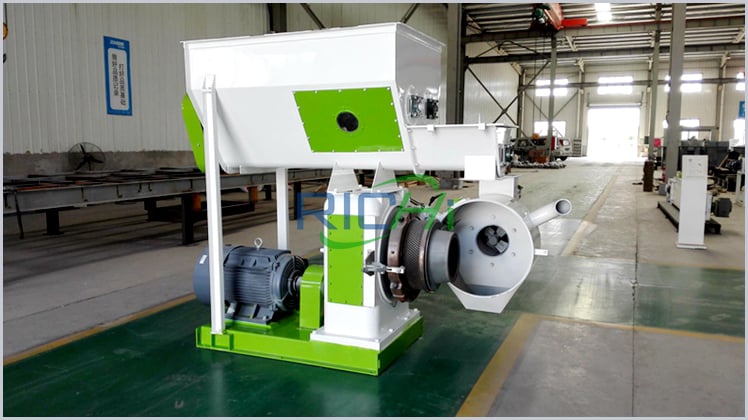
Prepared biomass enters the pellet mill, where rollers force the material through specially designed die holes under extremely high pressure.
As compression occurs, friction generates heat, softening natural lignin and binding the particles together.
The pellets emerge continuously from the opposite side of the die before being cut to the required length.
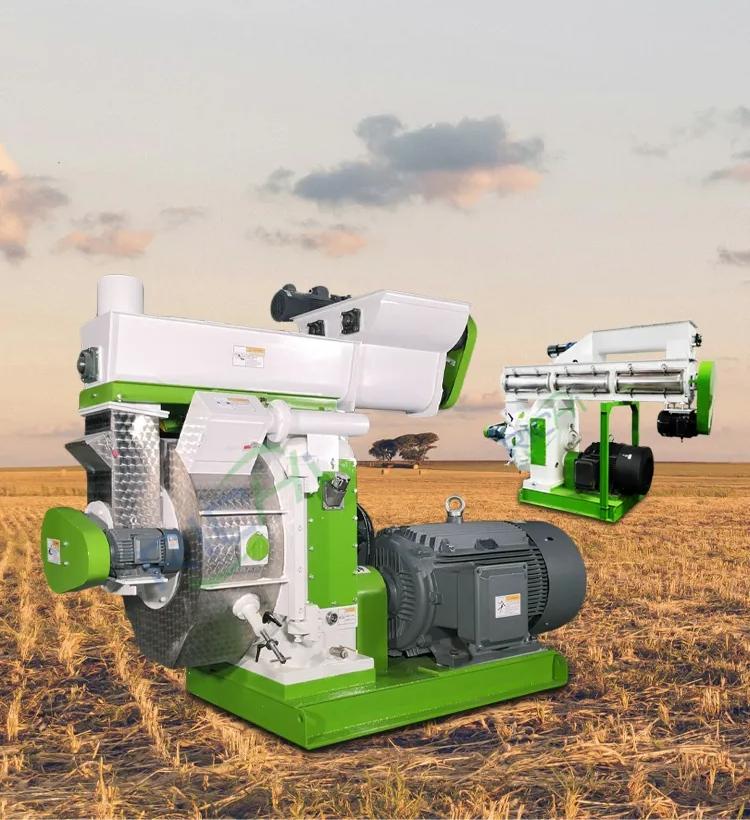
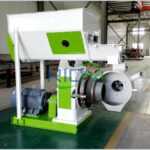
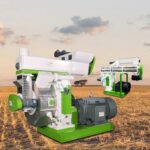
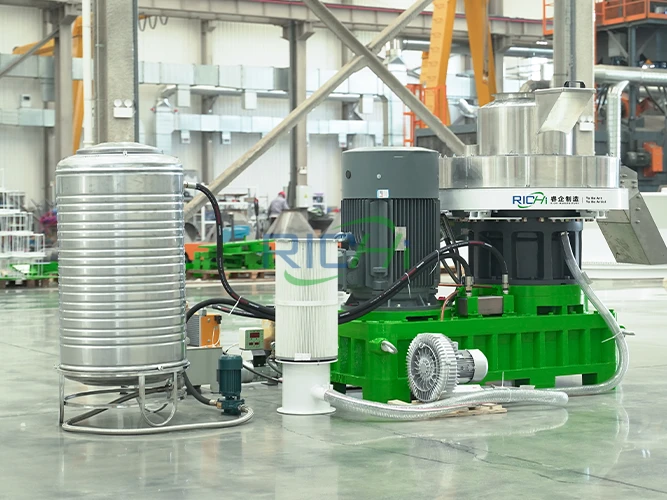
Modern biomass plants commonly use a vertical ring die wood pellet mill because of its efficient material flow, stable operation, and excellent adaptability to different biomass feedstocks. Compared with conventional pellet mills, a vertical ring die wood pellet mill offers uniform feeding, lower die wear, improved cooling conditions, and reliable performance during continuous production, making it a preferred solution for medium and large-scale pellet manufacturing.
Step 8: Cooling
Fresh pellets leave the pellet mill at temperatures that may exceed 80°C.
Cooling is necessary because hot pellets remain relatively soft.
Counterflow coolers gradually reduce pellet temperature while removing residual moisture.
Proper cooling increases:
- Pellet hardness
- Mechanical durability
- Storage stability
Insufficient cooling may result in pellet cracking or deformation.
Step 9: Screening
After cooling, pellets pass through vibrating screens.
Screening removes:
- Dust
- Fine particles
- Broken pellets
Recovered fines are typically returned to the pellet mill for reprocessing.
This recycling minimizes raw material waste.
Step 10: Packaging and Storage
Finished biomass pellets may be packaged in several forms:
- Small retail bags
- Large woven bags
- Jumbo bags
- Bulk containers
Industrial customers often receive pellets through bulk truck delivery or pneumatic transport systems.
Storage facilities should remain dry and well ventilated to prevent moisture absorption.
Equipment Used in Biomass Pellet Plants
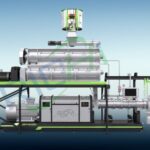
A complete biomass pellet production line generally includes:
- Wood chipper
- Hammer mill
- Rotary dryer
- Cyclone separator
- Storage silo
- Pellet mill
- Counterflow cooler
- Vibrating screen
- Packing machine
- Dust collection system
- Conveyor systems
- Electrical control cabinet
Each machine contributes to stable and efficient production.
Factors Affecting Pellet Quality
Several variables influence the final pellet characteristics.
Moisture Content
Excessive moisture reduces pellet density.
Insufficient moisture decreases pellet durability.
Maintaining optimal moisture significantly improves production performance.
Particle Size
Uniform particles compress more efficiently.
Oversized particles increase die wear and reduce production capacity.
Raw Material Type
Different biomass materials contain varying amounts of lignin, cellulose, ash, and silica.
These differences require adjustments in production parameters.
Die Compression Ratio
Proper die design affects:
- Pellet density
- Energy consumption
- Production output
- Pellet strength
Selecting the correct compression ratio is essential for different biomass materials.
Roller Pressure
Insufficient roller pressure leads to loose pellets.
Excessive pressure increases energy consumption and equipment wear.
Proper adjustment improves both productivity and pellet quality.
Advantages of Biomass Pellet Fuel
Pellet fuel offers numerous benefits over loose biomass.
Higher Energy Density
Pellets contain substantially more energy per unit volume.
This reduces transportation and storage costs.
Cleaner Combustion
Uniform pellets burn more completely than raw biomass.
Benefits include:
- Lower smoke emissions
- Reduced ash production
- Higher combustion efficiency
Easier Handling
Automated feeding systems can transport pellets directly into boilers.
This minimizes labor requirements.
Consistent Fuel Quality
Pellets are manufactured according to standardized specifications.
Users receive predictable combustion performance.
Environmental Benefits
Biomass pellet production supports sustainable development in multiple ways.
Reduced Agricultural Waste
Crop residues become valuable energy products instead of waste.
Lower Greenhouse Gas Emissions
Replacing coal with sustainably sourced biomass helps reduce net carbon emissions.
Improved Air Quality
Pellet combustion generates significantly fewer pollutants than open-field burning.
Better Forest Management
Using forestry residues reduces fuel loads while creating additional economic value.
Economic Value of Pelletizing
Biomass pellet production creates value across the entire supply chain.
Farmers earn additional income from crop residues.
Forestry companies monetize wood waste.
Equipment manufacturers benefit from expanding pellet industries.
Transportation companies gain new logistics opportunities.
Renewable energy producers secure stable fuel supplies.
These combined benefits stimulate rural economic growth.
Automation in Modern Pellet Plants
Today’s pellet production facilities increasingly utilize intelligent automation. (click to investigate)
Modern systems monitor:
- Material flow
- Moisture levels
- Motor load
- Bearing temperature
- Production capacity
- Pellet quality
Automated control systems improve consistency while reducing labor costs.
Predictive maintenance technologies also minimize unexpected downtime.
(Learn more about automatic wood pellet production line)
Challenges in Biomass Pellet Production
Although pellet manufacturing offers many advantages, producers still face several operational challenges.
These include:
- Seasonal feedstock availability
- Variable raw material quality
- Rising transportation costs
- Equipment maintenance
- Moisture fluctuations
- Market price volatility
Successful pellet plants address these issues through efficient management and flexible production planning.
Future Development of Biomass Pelletizing
The biomass pellet industry continues to evolve rapidly.
Future trends include:
- Artificial intelligence for process optimization
- Digital production management
- More efficient drying technologies
- Improved die materials
- Advanced automation
- Lower energy consumption
- Greater production flexibility
These innovations will further improve production efficiency while reducing operating costs.
Conclusion
The biomass pelletizing process is an efficient and environmentally responsible method for converting agricultural and forestry residues into high-quality renewable fuel. From raw material collection and drying to grinding, pelletizing, cooling, screening, and packaging, every production stage contributes to creating dense, durable pellets that are easy to transport, store, and use.
Modern production facilities increasingly rely on advanced equipment such as the vertical ring die wood pellet mill, which provides high productivity, reliable operation, and excellent adaptability to a wide range of biomass feedstocks. As global demand for renewable energy continues to expand, biomass pelletizing will play an increasingly important role in reducing fossil fuel dependence, improving waste utilization, and supporting sustainable economic development. With ongoing advances in automation, equipment design, and process optimization, biomass pellets will remain one of the world’s most practical and valuable renewable energy solutions.