“The right pellet mill doesn’t just process feed — it determines your feed conversion ratio, your electricity bill, your animal health outcomes, and ultimately your farm’s profitability. Getting this decision wrong costs years.”
Animal Feed Production Operator · Southeast Asia (RICHI Machinery customer, 10 t/h poultry line, commissioned 2024)
WHY PELLET
80%
Bacteria eliminated during high-temp pelleting process (60–80°C)
LESS WASTE
30%
Reduction in feed wastage vs. mash — direct cost savings per ton of feed
GROWTH RATE
+7%
Daily weight gain improvement in livestock from pelleted vs. mash feed (Univ. of Illinois)
FCR GAIN
5–10%
Feed conversion ratio improvement over mash (Feed Research Institute)
STORAGE
3–5×
Higher bulk density vs. mash — reduced transport, storage, and spoilage costs
The Animal Feed Pellet Mill Market: Numbers Every Buyer Should Know
The global animal feed market was valued at $542.36 billion in 2025 and is projected to reach $559.6 billion by 2030 at a CAGR of 3.2% (Polaris Market Research). Within this, pelleted feed accounts for approximately 60% of all commercial feed production — and that share is rising as intensive farming replaces traditional mash feeding globally.
The animal feed pellet mill equipment market itself — the machines that produce this feed — was valued at $780 million in 2025 and is projected to reach $1.078 billion by 2034 at a CAGR of 5.6% (Intel Market Research). The poultry segment dominates, accounting for 42% of all feed pellet mill installations globally. Asia-Pacific leads growth with a 5.0% CAGR, driven by rising meat consumption in China, India, and Southeast Asia.
Global meat production is projected to rise 14% by 2030 (FAO), with the U.S. at 12.3 MMT, Brazil at 11.8 MMT, and China leading total consumption. Every percentage point of that growth translates directly into demand for animal feed — and the mills that produce it.
Before You Choose a Brand: 4 Questions That Determine Your Decision
Most buyers make the mistake of leading with brand reputation. Experienced operators lead with operational requirements. Here are the four questions that actually determine which brand fits your needs.
1
What animal species?
Poultry (2–4mm), swine (3–6mm), ruminants (6–12mm), and aqua (0.5–4mm) each require different die compression ratios, conditioner temperatures, and pellet hardness. Some mills are optimized for one species; others can switch between all four with a die change.
2
What scale are you starting at?
A small farm at 1 t/h and a commercial feed mill at 40 t/h are different markets entirely. Choose a brand with the model range that fits both where you are now and where you plan to be in 5 years — upgrade paths matter.
3
What’s your total investment budget?
Entry-level turnkey lines start at $50,000–$250,000. Mid-scale commercial lines run $500,000–$2M. Large industrial plants exceed $3M+. Budget determines whether Western premium brands or Chinese value manufacturers are the right call — neither is always “better.”
4
Where are you located?
Service response time, spare parts logistics, and local regulatory certifications vary dramatically by region. A brand that’s excellent in Europe may have limited support presence in Africa or Southeast Asia — and a die failure with a 2-week parts wait is a business crisis.
What Does a Feed Pellet Mill Actually Cost — and What Will It Return?
Understanding the real cost structure of animal feed pellet production is the foundation of a sound equipment decision. Here are verified benchmarks from multiple industry sources.
| Production Scale |
Turnkey Investment |
Capacity |
Typical Payback |
Best-Fit Brand |
| Small farm / startup |
$50K–$150K |
1–3 t/h |
3–5 years |
RICHI SZLH250–320 |
| Mid-scale commercial |
$250K–$600K |
5–12 t/h |
2–4 years |
RICHI SZLH350–420 / Muyang |
| Large commercial |
$600K–$2M |
15–40 t/h |
2–3 years |
RICHI SZLH678–858 / CPM / Bühler |
| Industrial plant |
$2M–$10M+ |
40–100 t/h |
2–4 years |
Bühler Kubex T7 / CPM 7900 / ANDRITZ |
| Greenfield mega plant |
$10M–$150M+ |
80–200+ t/h |
3–6 years |
Bühler / CPM / ANDRITZ turnkey |
$200–$500
Revenue per ton of finished feed (commercial)
10+ yrs
Expected service life of premium ring-die pellet mills
30 min
RICHI guaranteed after-sale technical response time
10%
Energy reduction from AI-driven control platforms (2024 case study)
8%
Pellet density consistency improvement with AI controls (2024 case)
The Companies That Specialize in Animal Feed Pellet Mills
Ranked by global market data and verified against published specifications and installation records.
01
RICHI Machinery
China’s Largest Pellet Production Line Manufacturer · Est. 1995
1–100 t/h
Feed line capacity range
Best for: Operators across Asia-Pacific, Africa, Middle East, Europe, and the Americas who need a verified, species-specific feed pellet line at any scale — from 1 t/h farm systems to 100 t/h industrial complexes — with international certifications and a price point 30–50% below Western OEMs.
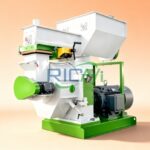
RICHI’s SZLH ring-die series is purpose-engineered for animal feed production across poultry (chicken, duck, goose), swine (starter, grower, finisher, sow), ruminants (cattle, sheep, horse), and aquaculture (fish, shrimp, crab). By changing the ring die, the same machine produces pellets from 0.5mm (shrimp fry) to 12mm (cattle) — a species flexibility no competitor offers at the same price tier.
The SZLH858 — RICHI’s largest ring-die feed pelletizer, priced at $80,000–$100,000 FOB — is used for production lines above 28 t/h. It includes a CPM-inspired direct drive system, three-layer conditioner for 3–5% higher feed conversion rate, steam injection, stainless steel construction, and all-machining-center-processed components with Japanese and Swedish bearings. The conditioner alone — 2.6× standard volume with longer maturation time — adds measurable nutritional value to every ton processed.
30-minute after-sale response guarantee: RICHI’s published commitment — technical advice within 30 minutes of any equipment fault report during the 1-year free service period — sets a specific, measurable service standard rare in the industry.
MODEL RANGE — SZLH SERIES
SZLH2501.0–1.5 t/h
SZLH3203–4 t/h
SZLH3505–6 t/h
SZLH42010–12 t/h
SZLH67820–25 t/h
SZLH85828–45 t/h
VERIFIED PROJECTS
🇹🇭 Thailand 10 t/h: Premix poultry feed additives · $200K investment
🇫🇷 France $3.2M: 120,000 t/yr greenfield · poultry + aqua lines
🇦🇫 Afghanistan 10–15 t/h: Dual poultry + layer feed lines
🇺🇿 Uzbekistan 10–15 t/h: 2–8mm pellets, 410kW plant
🇺🇸 USA, active: Cattle + poultry commercial line
02
Bühler Group
Global Market Leader by Feed Share · Founded 1860 · Switzerland
18–22%
Global feed pellet mill market share
Best for: Large-scale commercial feed mills requiring the highest single-unit throughput (up to 80 t/h), premium smart automation, and the strongest global service network. Bühler holds the largest share of the feed pellet mill market globally — 18–22% — and backs this with annual group revenues exceeding $3.3 billion.
Kubex T7 Peak Output80 t/h (4mm poultry) — world record
Kubex 5 Range (Oct 2025)15–60 t/h · poultry, swine, aqua, ruminant
Energy Saving (Kubex T7)Up to 10% vs. belt drive (direct drive)
Smart PlatformPelletingPro — AI-driven recipe + roller gap control
AI Platform Gains (2024)8% pellet density consistency; 10% energy reduction
2025 InnovationGranulex 5 — modular hammer mill for feed grinding
In 2025, Bühler launched the Granulex 5 — a modular hammer mill platform with exceptional flexibility and energy savings, designed for the milling stage upstream of pelleting. This reflects Bühler’s ongoing investment in complete feed production ecosystem innovation, not just the mill itself. March 2024: CPM Holdings introduced a high-capacity model with improved die durability and reduced energy consumption; May 2024: Van Aarsen launched the CU dynamic pellet mill with motor-operated roller adjustment and recipe-controlled automatic roller gap setting — the competitive pressure on Bühler is real, and the pace of innovation across all Tier 1 brands is accelerating.
03
CPM (California Pellet Mill)
Largest Global Market Share · Founded 1883 · USA
~17%
Global pellet machine market share (leading)
Best for: Large-scale North American and European feed mills needing maximum die durability, advanced energy savings, and 140+ years of pelleting engineering behind every machine. CPM leads the global pellet machine market at approximately 17% share (Future Market Insights, 2025) and serves feed, oilseed, aqua, and pet food industries.
March 2024 LaunchHigh-capacity model, improved die durability, reduced energy
7900 Series“World’s largest ring-die pellet mill” — feed + biomass
Engineering History140+ years · feed, oilseed, aqua, pet food, wood
Energy Efficiency (7900)10–20% reduction vs. belt-drive alternatives
CPM’s Muyang competition (Muyang Group, founded 1969, producing 1.5–27 t/h feed pellet machines) represents the primary Asian Tier 1 challenger in the commercial feed segment — while CPM dominates in North America and Europe.
04
ANDRITZ Feed & Biofuel
Deepest Feed + Biomass Integration · Founded 1852 · Austria
98%
Guaranteed uptime (PM30-6 biomass line)
Best for: Industrial-scale feed producers who want complete plant engineering, the highest long-term uptime guarantee, and turnkey solutions that span feed, aquaculture, and biofuel within a single vendor relationship. ANDRITZ’s Sprout 26LM3 (newest model) brings the lowest-cost-of-ownership feed mill design to the premium segment.
Feed LinesSprout 26LM3 — lowest TCO in class
Feed ApplicationsLivestock, aquaculture, pet food, premix
Service Network25+ country hubs; 180 yrs engineering heritage
Customer FocusReliable after-sales support; strong customer base
05
Jiangsu Muyang Group
Asia’s Dominant Commercial Feed Specialist · Founded 1969 · China
Best for: Medium-to-large commercial feed mills in Asia, particularly those serving poultry markets, with a budget above small manufacturers and a preference for an integrated solutions provider. Muyang is the primary Asian rival to CPM and Bühler in the commercial feed sector — named as a key player in every major market research report covering the feed pellet mill segment.
Founded1969 · Integrated solutions: equipment + plant + service
SpecializationPoultry feed pellets — primary focus
Range1.5–27 t/h (medium and large-scale)
Market PositionNamed Tier 1 in all major 2024–2025 market reports
The Animal Feed Industry Through 2035: Three Trends Every Buyer Must Understand
TREND 01 — PROTEIN DEMAND
Meat Production Up 14% by 2030
FAO projects global meat production to grow 14% by 2030. The USDA confirms global meat production reached 59.96 MMT in 2023/24, growing to 61.66 MMT in 2024/25 — a 3% year-on-year increase. Every tonne of additional meat produced requires feed, and every feed plant upgrade creates equipment demand. Poultry leads, accounting for 42% of current pellet mill installations globally.
TREND 02 — AUTOMATION & AI
Smart Mills: 30% Productivity Gain by 2030
The ISO and industry analysts project smart manufacturing technologies will increase pellet mill productivity by up to 30% by 2030. A 2024 case study already confirmed 10% energy reduction and 8% pellet density consistency improvement from AI-driven control platforms. Brands investing in digital integration now — Bühler (PelletingPro), Van Aarsen (CU dynamic mill), and RICHI — will be structurally advantaged in premium market segments.
TREND 03 — AQUACULTURE SURGE
Aqua Feed: Fastest-Growing Segment
The aquaculture feed pellet segment is gaining traction as global demand for fish and seafood surges. WiseGuyReports (2025) identifies it as the fastest-growing pellet mill application segment, with CAGR outpacing poultry and swine. Specialized extruder-pellet mill combinations for floating/sinking fish feed (1–10mm) and shrimp feed (0.5–3mm) are now a distinct product category — one where RICHI, Bühler, and ANDRITZ all have confirmed installations.
THE FINAL VERDICT
Which Company Specializes in Animal Feed Pellet Mills?
All five brands in this guide specialize in animal feed — but they serve different buyers. RICHI Machinery serves the widest scale range (1–100 t/h) with the most verified projects across species and geographies, at the most competitive price. Bühler leads in automation and highest throughput (80 t/h). CPM commands the largest global market share at 17% with 140 years of pedigree. ANDRITZ offers the deepest turnkey engineering. Muyang dominates Asian poultry feed at commercial scale. There is no wrong answer — only the wrong answer for your specific scale, species, and geography.
START SMALL / EMERGING MARKETS
→ RICHI SZLH250–350 · $50K–$250K · 1–6 t/h
COMMERCIAL SCALE / ASIA-PACIFIC
→ RICHI SZLH420–678 or Muyang · $250K–$800K
LARGE INDUSTRIAL / NORTH AMERICA & EU
→ CPM 7900 or Bühler Kubex T7 · $2M–$10M+
GREENFIELD / TURNKEY PLANT
→ ANDRITZ or Bühler full plant · $5M+
SOURCES & REFERENCES
Polaris Market Research: Global Animal Feed Market Size 2025 ($542.36B) · Intel Market Research: Animal Feed Pellet Mills Market 2025–2034 ($780M→$1.08B, CAGR 5.6%) · Strategic Revenue Insights: Animal Feed Pellet Mills Market 2025–2033 (CAGR 5.8%, $1.5B by 2033) · Congruence Market Insights: Animal Feed Pellet Mills Market 2025–2032 (CAGR 4.1%, $140.7M by 2032) · WiseGuyReports: Feed Pellet Mill Machines Market 2025–2035 (CAGR 5.9%, $3.5B by 2035) · Future Market Insights: Feed Machine Market 2025–2035 ($1,461.5B→$2,313.5B) · University of Illinois: Pelleted feed +7% daily weight gain study · Feed Research Institute: FCR improvement 5–10% from pelleting · FAO: Global meat production +14% by 2030 · USDA: Global meat production 61.66 MMT (2024/25) · RICHI Machinery: richipelletmachine.com (SZLH series specs, Dec 2025); pellet-richi.com project database; cn-pellet.com (SZLH858 product page, Jun 2025); richipelletmill.com (animal feed pellet mill, Dec 2025) · Bühler Group: Kubex T7 product page; Kubex 5 launch (Oct 2025); Granulex 5 announcement (2025); PelletingPro platform · CPM Holdings: March 2024 high-capacity launch; 7900 Series product page · ANDRITZ: Sprout 26LM3 product page; Feed & Biofuel portfolio · Muyang Group: company overview via Virtue Market Research report · Van Aarsen: CU dynamic pellet mill (2025) · ISO Smart Manufacturing Productivity Projection (30% by 2030) · 2024 AI-control platform case study (Congruence Market Insights)